ERP Deployment & Customization
2026
Standing up and customizing ERPNext v16 for a full back-office: manufacturing, POS, HR, CRM, projects and accounting in one system.
- Role
Full-Stack Software Engineer — deployment, configuration and AI-assist customization
- Year
2026
- Status
- Production
- Stack
- ERPNext
- Frappe
- MariaDB
- Redis
- Linux
- Bench
Overview
A standalone ERPNext v16 deployment configured as a complete back-office for a business running manufacturing, retail (POS), HR/payroll, CRM and accounting from a single system, deployed on its own isolated Bench.
Problem
The business needed manufacturing, point-of-sale, HR, CRM and accounting to share one data model instead of five disconnected tools, with a low-friction way for non-technical staff to perform everyday tasks like drafting invoices or logging journal entries.
Solution
I deployed and configured a dedicated ERPNext v16 instance — on the same infrastructure pattern used for Carry Go's isolated Bench — and tailored the module set (manufacturing, HR, CRM, accounting) to the business's actual workflow rather than shipping the defaults. I also wired in an AI assistant surfaced directly on the desk home screen, so staff can ask it to create a sales invoice or explain a workflow instead of hunting through menus.
Architecture
The Frappe desk is the single entry point across every module. Manufacturing, purchasing, sales, HR/payroll and accounting all sit on the same MariaDB instance, with Redis handling caching and Frappe's scheduled jobs, running on an isolated Bench separate from other tenants on the same infrastructure.
Features
- Unified module grid: manufacturing, POS, HR, CRM (Frappe CRM), accounting, projects, quality, and asset management.
- Home dashboard summarising daily operations — open approvals, active tasks, cash position, and revenue trend.
- AI assistant embedded in the desk home for natural-language task execution.
- Isolated Bench deployment, independent of other ERPNext instances on the same infrastructure.
Development Process
Deployment followed the same discipline established on Carry Go: an isolated Bench, careful port and service separation, and configuration driven by the client's actual module usage rather than a default install.
Challenges
Balancing ERPNext's very large default surface area against what the business actually needed meant deliberately hiding and reconfiguring modules rather than leaving every default screen active — reducing daily clutter for non-technical staff.
Results
A single back-office system covering manufacturing through accounting, with an AI assistant lowering the barrier for everyday tasks.
Future Improvements
Deeper AI-assistant coverage of reporting workflows, and role-specific home dashboards per department.
02Gallery
Select any screen to open it full size.
01Desk02
Work
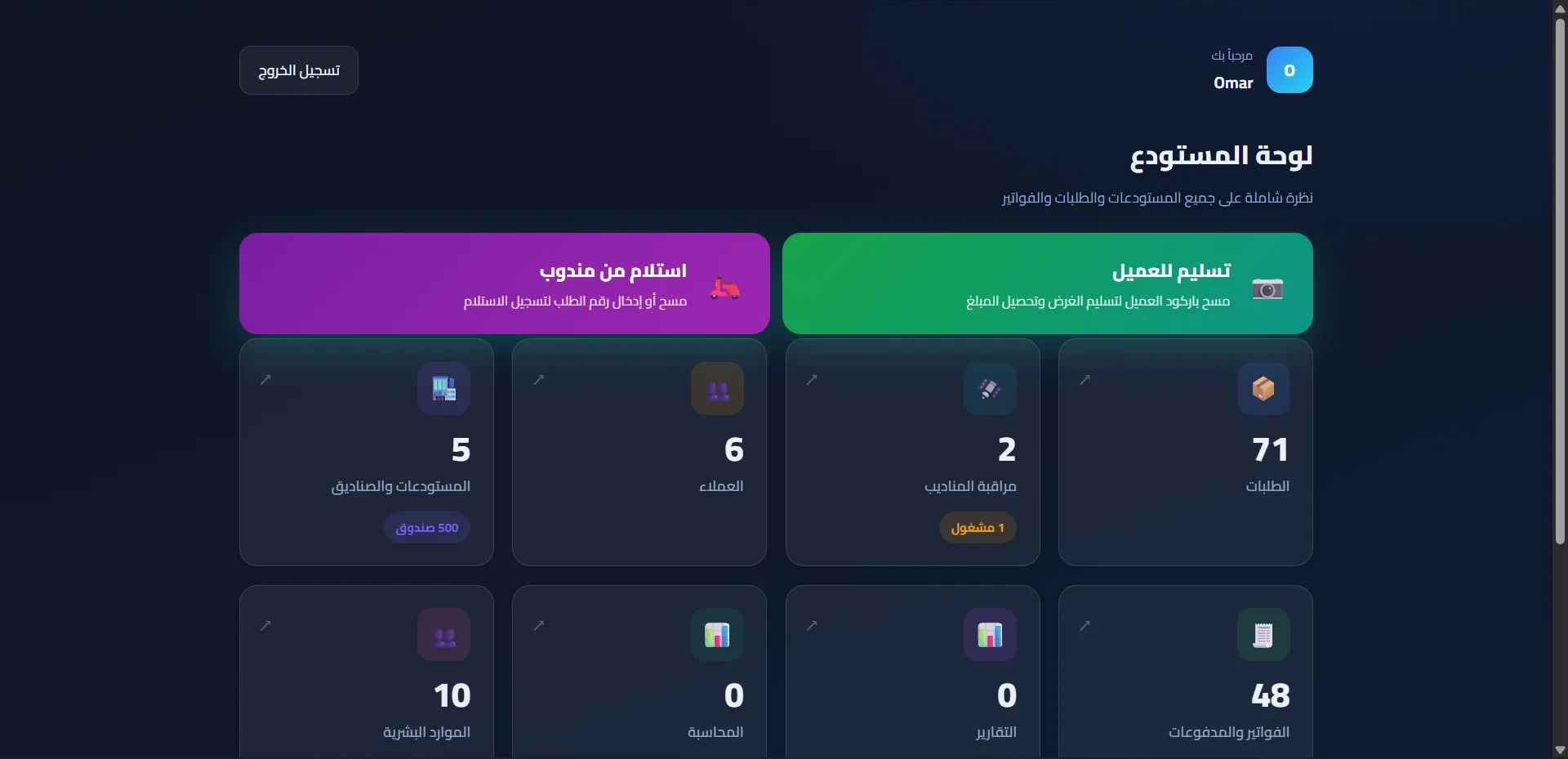
Warehouse & Logistics Platform · Web · 2026
Carry Go — Warehouse Portal
A bilingual warehouse operations portal — orders, attendance, payroll and embedded ERPNext accounting from a single interface.
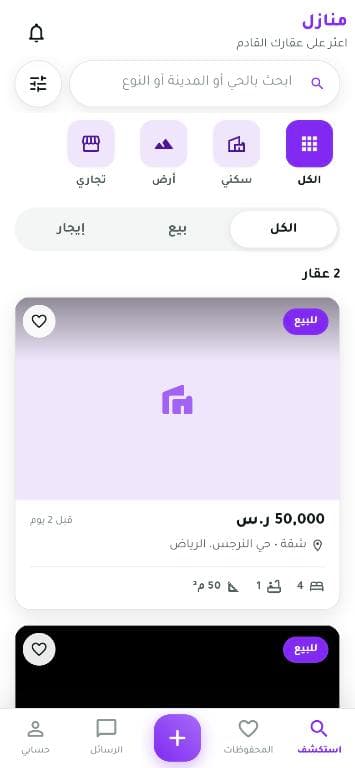
Real Estate Platform · Mobile + Web · 2026
Manazel — Real Estate Platform
A Saudi real-estate marketplace for First Tower Company — a Flutter client app, a React admin dashboard and a NestJS backend, with pre-publication review, advertiser verification and wallet-based promotion.